Most exhibitors don’t think much about booth rentals until the week of the show, when a missing crate or a mismatched graphic panel turns into a real problem. A New York exhibit booth rental works well only when the company behind it controls the parts that actually go wrong.
This piece gives an idea of the specific things worth checking before signing a contract: who builds and stores the components, how much of the booth can be branded, and who shows up on the floor when something needs adjusting mid-show.
Who Actually Owns the Inventory
The first question worth asking a rental company is whether they own their booth components or broker them from a third party. Ownership determines almost everything downstream: how quickly a damaged panel gets replaced, whether furniture matches what was shown in the quote, and how much control the company has over its own schedule during a busy show season.
- Ask to see photos of actual inventory, not stock catalog renderings
- Confirm whether structures, counters, and furniture are stored and maintained in-house
- Find out what the replacement process looks like if a component is damaged in transit
A company that owns and stores its own inventory locally is generally better positioned to fix a problem on short notice than one that’s coordinating between multiple outside vendors.
Customization Beyond a Generic Pop-Up
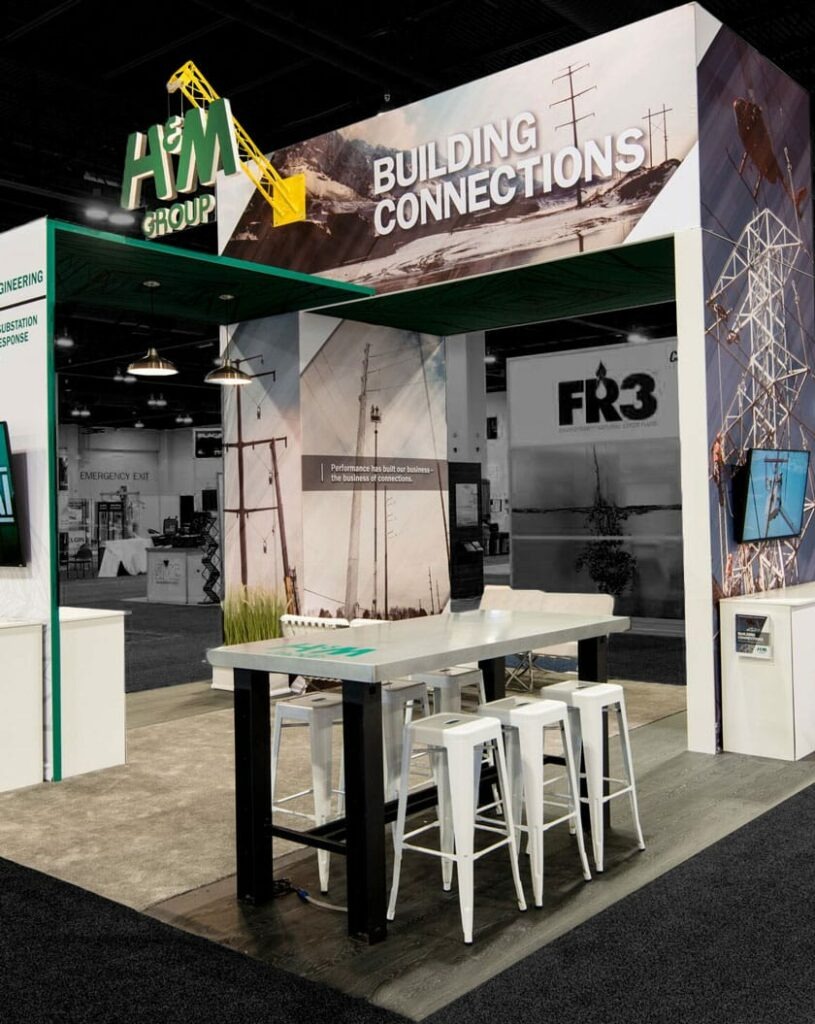
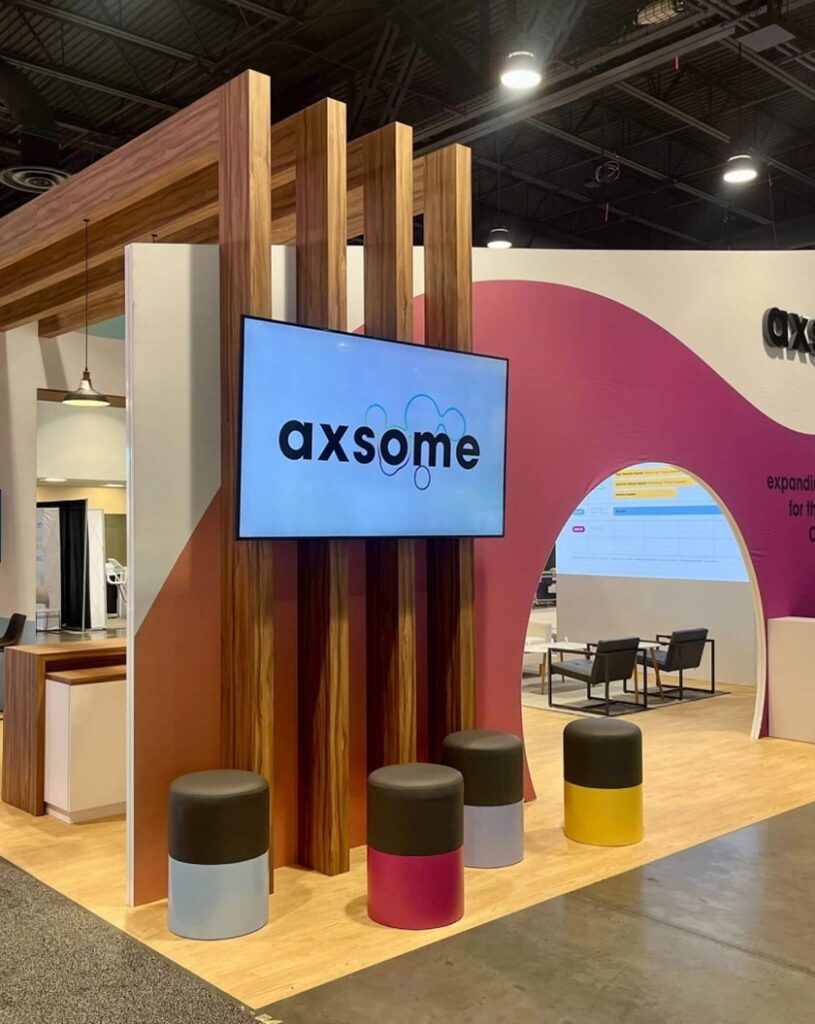
A rental doesn’t have to look like a rental. The gap between a forgettable 10×10 and a booth that actually holds attention usually comes down to graphics, fabrication details, and how much the structure is dressed up beyond the base frame. A well-run New York trade show booth rental program treats reusable structural inventory as a starting point, not the finished product; custom SEG fabric graphics, branded counters, and selective millwork get layered on top so the booth reads as purpose-built.
- SEG fabric or direct-print graphics sized to the specific booth footprint
- Custom counters, literature racks, and lightboxes that carry brand colors and messaging
- Furniture packages that match the booth’s look rather than generic show-floor rentals
If a vendor’s answer to “can we customize this” is limited to swapping a logo onto a stock backdrop, that’s worth noting before signing.
Setup, Dismantle, and Floor Support
New York venues each have their own move-in rules, union labor requirements, and dock scheduling quirks, and a rental company’s familiarity with those details shows up on install day. A booth that arrives on time but gets installed by a crew unfamiliar with the venue’s specific process can eat hours of a tight setup window.
- Ask who physically handles install and dismantle: in-house crew or subcontracted labor.
- Confirm whether someone is available on the show floor if adjustments are needed mid-run
This is also where local presence matters more than a national directory listing suggests. A team working New York shows regularly tends to know the loading-dock realities that a remote vendor is only reading about.
Storage and Repeat-Show Logistics
For exhibitors doing more than one show a year, what happens to the booth between events matters almost as much as what happens during them. A New York trade show booth rental that gets returned, disassembled, and re-quoted from scratch every time adds cost and delay that a storage-and-reuse arrangement avoids.
- Ask whether the company offers storage between shows for repeat use
- Find out how graphics updates are handled if messaging changes between events
- Clarify what’s included if the booth needs to scale from a 10×10 to a 10×20 for a different show
Visitor Experience and Functionality Should be the Top Priority
It may happen that an attractive stand is not effective due to difficulties faced by visitors in terms of understanding where to go and what actions to perform. Consider the experience from the point of view of a visitor. Ensure visitor flow:
- See the stand from the aisle.
- Get the main idea easily.
- Approach without obstacles due to furniture and exhibits.
- Communicate with personnel, products or demonstrations.
Consider accessibility; the stands should be accessible for a wide range of people. Functionality is even more important than attractiveness.
Questions Worth Asking Before Signing
A short pre-contract checklist saves most of the back-and-forth that otherwise happens over email during a tight production window:
- Does the quote include graphics production, or is that billed separately?
- What’s the turnaround time if a change is needed after the quote is approved?
- Is there a point of contact who will be reachable during the show itself?
- What’s the cancellation or rescheduling policy if the show date shifts?
Conclusion
Choosing a booth rental partner is about who shows up when something needs fixing two hours before doors open. A well-managed New York trade show booth rental program covers that gap with in-house inventory, real customization, and a crew that knows the venue.
Exhibitors who vet vendors against the checklist above ownership, graphics, setup support, and storage walk into show week with far fewer surprises than those who chose based on the lowest quote alone.
FAQs
1. What should I look for in a New York exhibit booth rental?
Key things to check include who owns and stores the inventory, how much customization is available, who handles setup and dismantle, whether storage is offered for repeat shows, and how the design supports visitor flow.
2. Why does it matter whether a rental company owns its own inventory?
Companies that own and store their own inventory locally can replace damaged components faster and have more control over their schedule, compared to companies that broker parts from third-party vendors.
3. Can a rental booth still be customized to match my brand?
Yes, a well-run rental program layers custom SEG fabric graphics, branded counters, literature racks, and matching furniture packages onto reusable structural inventory so the booth looks purpose-built rather than generic.
4. Who handles setup and dismantle for a New York exhibit booth rental?
It depends on the vendor: some use an in-house crew familiar with New York venue rules, while others subcontract labor, which can slow down installation during a tight setup window, so it’s worth asking directly.
5. Is storage available for booths used at multiple shows?
Many rental companies offer storage between shows for exhibitors doing repeat events, which avoids the cost and delay of disassembling and re-quoting the booth from scratch each time.